How Much Does Stump Grinding Cost?
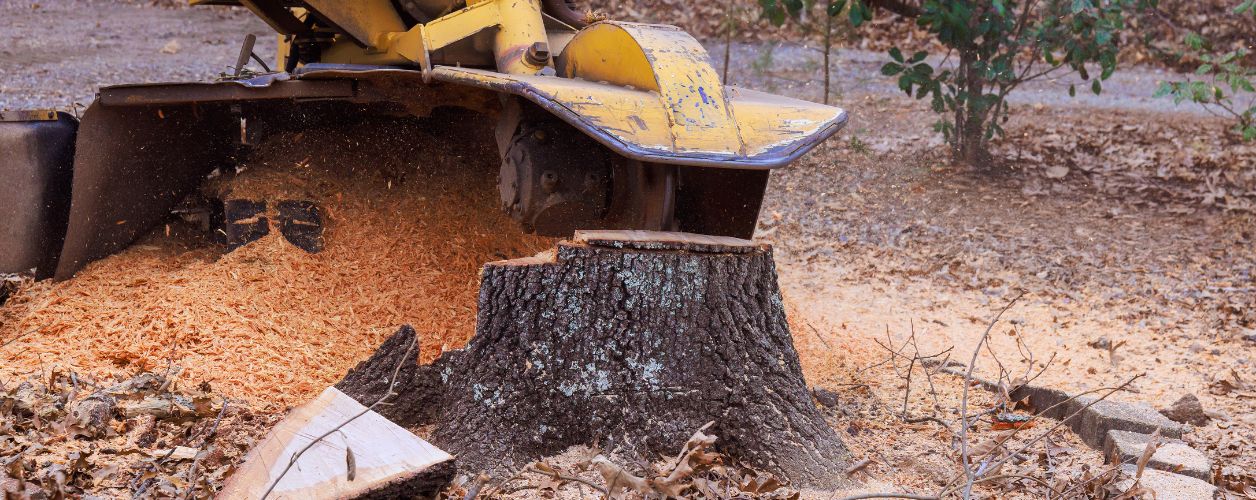
Stump Grinding Cost: $150 to $400 per stump
In Australia, stump grinding typically costs about $150 to $400 per stump for standard jobs. Heavier, larger, or hard-to-access stumps can push the price toward $500 or more, depending on size, location, and equipment needed.
Table Of Contents
- How Much Does Stump Grinding Cost in Australia?
- What Is Stump Grinding and Why It’s Used
- Average Stump Grinding Costs in Australia
- What Factors Affect Stump Grinding Costs
- Stump Grinding Costs by Australian Region
- What’s Usually Included in a Stump Grinding Quote
- DIY Stump Grinding vs Hiring a Professional
- How to Get an Accurate Stump Grinding Quote
- Is Stump Grinding Worth the Cost?
- Hire a Professional for Safe, Efficient Results
How Much Does Stump Grinding Cost in Australia?
After finally cutting down a dead, diseased, or awkwardly placed tree, many homeowners breathe a sigh of relief—until they look down and realise an ugly, stubborn stump is still sitting right in the middle of their yard. Left untreated, tree stumps can become severe tripping hazards, breeding grounds for termites, and frustrating obstacles for lawnmowers and new landscaping projects.
If you want to reclaim your outdoor space, the most effective solution is to have the stump ground away. But before you call a local professional, the first question on your mind is likely: “How much does stump grinding cost in Australia?”
The truth is, while stump grinding is highly affordable compared to full excavation, there is no single flat rate. The price you pay will depend on the size of the stump, the type of wood, how difficult it is to access your yard, and where you live in Australia.
In this comprehensive guide, we will break down the typical tree stump grinding cost you can expect to pay, the factors that influence your quote, and whether hiring a professional arborist is a smarter choice than tackling the job yourself.
What Is Stump Grinding and Why It’s Used
Before looking at the stump grinding prices, it is important to understand exactly what the service entails and why it is the preferred method for dealing with leftover trees in Australia.
Stump grinding involves using a specialised piece of heavy machinery—called a stump grinder—equipped with a high-speed, rotating steel cutting wheel covered in heavy-duty carbide teeth. The operator positions the wheel over the stump and moves it side to side, systematically chipping away the wood until the stump is reduced to a pile of mulch and sawdust.
Stump Removal vs Grinding
Many people use the terms interchangeably, but stump removal vs grinding represents two entirely different processes.
- Stump Removal (Excavation): Involves using heavy earthmoving machinery (like an excavator) to dig out the entire stump and its massive, sprawling root ball. This is highly destructive to your yard, requires backfilling a massive hole with topsoil, and is very expensive.
- Stump Grinding: Destroys the visible stump and grinds the main crown to about 150 mm to 300 mm below ground level. The extensive underground root system is left to naturally decompose over time.
Australians overwhelmingly choose stump grinding because it is significantly cheaper, far faster, and causes minimal disruption to the surrounding lawn, garden beds, and underground utilities.
Average Stump Grinding Costs in Australia
So, what is the average stump grinding cost Australia-wide? Pricing is heavily dependent on the diameter of the stump, the site access, and your location.
Because it costs money for a contractor to load up their heavy machinery, drive to your property, and set up, almost all businesses have a minimum call-out fee. If you have a single, tiny stump, you will generally pay this minimum fee regardless of how fast the job takes.
Below is a realistic Australian cost guide based on stump size:
| Stump Size (Diameter) | Typical Cost Range (AUD) | Notes |
|---|---|---|
| Small (under 30 cm) | ~$80 – $200 | Easy access, quick job |
| Medium (30–60 cm) | ~$150 – $350 | Most common residential size |
| Large (60–100 cm) | ~$300 – $600 | Requires more time & machine power |
| Very Large (100 cm+) | ~$500 – $900+ | Hardwood / difficult access scenarios |
| Minimum Call-Out Fee | ~$150 – $250 | Often applies to small or single-stump jobs |
For the average Australian residential property, most standalone stump grinding jobs will fall comfortably between $200 and $350.
What Factors Affect Stump Grinding Costs
You might wonder why your neighbour paid $150 to have their stump ground down, while your quote came back at $450. Several key variables influence how an arborist or stump grinding specialist calculates their pricing.
Stump Size and Diameter
When quoting, professionals care far more about the diameter of the stump than its height. A stump is measured across its widest point at ground level (where the roots begin to flare out), not across the flat cut at the top. A stump that is 80 cm wide simply takes more machine time, fuel, and wear-and-tear on the cutting teeth than a 30 cm stump.
Tree Type and Wood Hardness
Not all wood grinds the same. Australia is home to some incredibly dense hardwood trees, such as Ironbark, Spotted Gum, and Jarrah. Hardwood takes significantly longer to grind and blunts the expensive carbide teeth on the machine much faster. As a result, hardwood stumps will always cost more to remove than softwoods like Radiata Pine.
Additionally, palm trees are highly fibrous and stringy. While they aren't "hard," their fibrous nature often tangles in the grinding wheel, requiring the operator to frequently stop and clear the machine, which can also increase the cost.
Access and Site Conditions
The ease with which a contractor can get their machine to the stump plays a massive role in the final price. Large, powerful stump grinders can chew through a massive stump in 20 minutes, but they require wide access gates (often 1.5 to 2 metres) to enter a backyard.
If your stump is located down a narrow side path, behind a 900 mm gate, up a flight of stairs, or on a steep retaining wall, the contractor must use a much smaller, less powerful machine. Because the smaller machine takes twice as long to grind the stump, your labour costs will naturally increase.
Location Within Australia
Like any trade, local economics affect pricing. If you live in a major metropolitan hub, you may face higher labour rates, but greater competition among contractors can sometimes keep prices fair. Conversely, if you live in a regional or remote area, the contractor will likely charge additional travel fees to cover the fuel and time spent driving out to your property.
Number of Stumps
If you have recently cleared a block and have ten stumps to grind, you won't be charged the standard individual rate for each one. Once the machinery is unloaded and on-site, the most expensive part of the contractor's day is done. For bulk jobs, contractors usually offer a heavily discounted "per stump" rate, an hourly rate, or a flat half-day/full-day rate, which provides excellent economies of scale for the homeowner.
Stump Grinding Costs by Australian Region
While the pricing table above provides a solid national average, stump grinding prices can fluctuate depending on your specific state or territory due to local travel distances, tree types, and operating overheads.
New South Wales
In Sydney and the greater NSW metro areas, higher business overheads, road tolls, and difficult parking often push prices toward the higher end of the spectrum. Minimum call-out fees in Sydney frequently sit around the $200 to $250 mark. Regional NSW typically sees slightly lower base rates, though travel fees may apply.
Victoria & Queensland
Melbourne and Brisbane both enjoy highly competitive arborist markets. In Victoria, tight access in inner-city suburbs often dictates the use of smaller, time-consuming machines. In Queensland, contractors frequently deal with fibrous palm stumps and rapid subtropical growth. Prices in both states generally align closely with the national average of $200 to $350 for standard residential jobs.
South Australia
In Adelaide and surrounding regions, pricing is generally quite stable and competitive. However, the sprawling nature of the state means that homeowners in the Adelaide Hills or further regional areas should expect standard travel surcharges to be added to their final invoice.
Western Australia
Perth and the wider WA region are home to incredibly dense native hardwoods, such as Jarrah and Marri. Because these trees are notoriously difficult to grind and cause excessive wear on machinery, WA contractors may quote slightly higher prices for large native stumps compared to contractors dealing with softwoods on the East Coast.
What’s Usually Included in a Stump Grinding Quote
To ensure you are comparing apples to apples when looking at quotes, it is crucial to understand what a standard arborist stump grinding service actually includes.
Standard Inclusions:
- Machine and operator: The cost of the heavy equipment, fuel, safety gear, and the trained professional doing the work.
- Standard depth grinding: Grinding the main stump and central root crown to a standard depth (usually 150 mm to 300 mm below the surrounding soil level).
- Basic clean-up: Pushing the resulting wood chips and soil mixture back into the hole to make the area safe and level.
Common Extras That May Cost More:
- Deeper grinding: If you plan to lay a deep concrete slab or plant a new, large tree in the exact same spot, the operator will need to grind much deeper (up to 500 mm), which costs extra.
- Surface root grinding: Chasing and grinding visible structural roots that snake across the yard away from the main stump is usually charged as an additional line item.
- Removal of wood chips: Stump grinding creates a massive volume of mulch (often three times the volume of the original stump). While most homeowners keep this excellent mulch for their garden, asking the contractor to shovel, load, and transport the chips away will usually incur an extra fee of $50 to $150+.
- Difficult access surcharges: Lifting machines over fences or navigating steep terrain will add to the final bill.
DIY Stump Grinding vs Hiring a Professional
Many practical homeowners assume they can save money by renting a machine and doing the job themselves. However, a closer look at the costs and risks often proves otherwise.
DIY Stump Grinder Hire Costs
Local equipment hire companies (like Kennards or Coates) offer portable stump grinders to the public. The typical stump grinder hire cost in Australia looks like this:
- Daily hire: ~$170 – $300+
- Weekly hire: ~$500 – $950+
While $200 a day might sound cheaper than a $300 professional quote, you must also factor in the hidden costs. You will need a vehicle with a tow ball to transport the machine (or pay for delivery), buy your own fuel, and ensure you have proper heavy-duty safety gear (steel-capped boots, face shields, hearing protection).
The Risks and Limitations of DIY:
Portable rental grinders are generally lightweight, low-horsepower machines designed for small, soft stumps. If you attempt to grind a 60 cm Ironbark stump with a 13-horsepower rental machine, it could take you an entire exhausting day of bone-jarring, physically demanding work. Furthermore, stump grinders are dangerous; they can violently kick back rocks, glass, and hidden metal wire at high speeds.
Professional Stump Grinding
Hiring a professional is almost always the smarter, more cost-effective choice.
- Speed: A professional with a 75-horsepower, commercial-grade machine can obliterate a medium-sized stump in 20 minutes—a job that might take a DIYer four hours.
- Safety and Insurance: Professionals are trained to locate underground utilities and operate the machinery safely. Most importantly, reputable contractors carry Public Liability Insurance. If their machine throws a rock through your neighbour’s window, they are covered. If you do it yourself, you are footing the bill.
- Cost Efficiency: When you compare the $200 daily hire fee plus your own time and physical labour against a $250 professional quote, hiring an expert is a clear winner for any stump over 30 cm.
How to Get an Accurate Stump Grinding Quote
To ensure you get the best and most accurate tree stump grinding cost upfront, follow these simple, actionable steps when contacting local professionals:
- Measure correctly: Take a tape measure and measure the diameter of the stump at ground level (the widest point), not the top where it was cut.
- Identify the tree (if possible): Let the contractor know what species of tree it was, or at least whether it is a hardwood, softwood, or palm.
- Assess your access: Measure the exact width of your narrowest gate or pathway leading to the stump, and mention any stairs or steep slopes.
- Decide on the chips: Clearly state whether you want to keep the mulch or if you require the contractor to cart it away.
- Request multiple quotes: Always get at least two to three quotes from local, insured professionals to ensure you are paying a fair market rate. Provide them with photos of the stump with a common object (like a shoe or shovel) next to it for scale.
Is Stump Grinding Worth the Cost?
Absolutely. While it might seem tempting to save a few hundred dollars and let an old stump sit in your yard, the long-term consequences often cost much more.
Old, rotting stumps act as a beacon for subterranean termites and white ants. Once a colony establishes itself in an old stump, it is only a matter of time before they migrate toward the timber framing of your home. Additionally, some tree species (like certain eucalypts and weed trees) will continue to send up aggressive sucker shoots from the stump, meaning the tree will continually try to regrow until the crown is mechanically destroyed.
By paying a few hundred dollars for professional grinding, you instantly eradicate tripping hazards, safeguard your home from pests, stop unwanted regrowth, and immediately reclaim that patch of land for turf, paving, or beautiful landscaping.
Hire a Professional for Safe, Efficient Results
Understanding the stump grinding cost Australia-wide is all about recognising the value of the service. For the average homeowner, spending between $200 and $350 to have a medium-sized stump safely and swiftly eradicated is a highly worthwhile investment in the safety, aesthetics, and usability of their property.
While hiring a DIY machine might initially seem like a fun weekend challenge, the high stump grinder hire cost, physical danger, and sheer exhaustion involved make it an impractical choice for most.
For the best, safest, and most efficient results, it is always recommended to hire a fully insured, experienced professional or qualified arborist. They have the heavy-duty machinery required to turn a stubborn hardwood stump into a neat pile of garden mulch in a matter of minutes. Don’t let an ugly stump ruin your landscaping—reach out to a local stump grinding specialist today to get a tailored quote and take back your backyard.
Costs of various services and materials in this cost guide should be taken as estimates. These depend on location, preference and demands in the market.

Answers to Your Common Questions
No. Stump grinding destroys the main body and the root crown of the tree down to about 150-300 mm below the surface. The remaining lateral roots spreading through your yard are left underground to naturally decompose and turn into compost over the coming years.
A standard commercial grind goes about 150 mm to 300 mm below soil level. If you need it deeper for construction or plumbing purposes, you must specify this when asking for a quote, as it requires more time.
Yes. Once the stump is ground down and covered with a good layer of topsoil, you can easily lay new turf or plant shallow-rooted shrubs over the area. However, it is not recommended to plant a brand-new tree in the exact same hole immediately, as the decaying old roots will temporarily draw vital nitrogen out of the soil.
With professional equipment, a small 30 cm stump can be ground down in 15 to 30 minutes. A massive, 100 cm hardwood stump may take two to three hours.
Yes, significantly. Because full removal requires heavy excavators, massive soil disruption, and expensive tipping fees to dispose of the giant root ball, grinding is usually a fraction of the cost of full stump excavation.
YOU MIGHT ALSO BE INTERESTED IN
![What is tree lopping and how much does it cost? [2026]](https://servicetasker.com.au/storage/2025/05/1747738526.jpg)