How Much Does Rendering Cost?
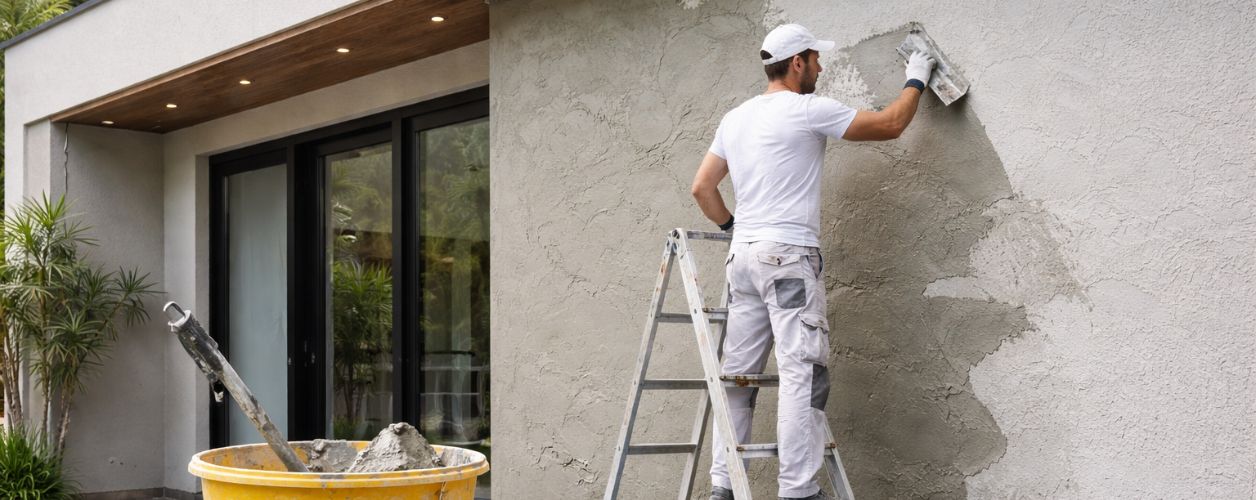
Rendering Cost: $30 to $150 per m²
In Australia, rendering a house typically costs about $30 - $150 per m², depending on the type of render (e.g., cement, acrylic or insulating) and job complexity. For a whole exterior project, most single-storey homes fall roughly in the $8,000 - $20,000 range, while larger or two-storey homes can reach $30,000 +.
Table Of Contents
- Introduction
- Typical Rendering Cost Ranges in Australia
- What Does a Rendering Quote Usually Include?
- Key Factors That Affect Rendering Costs
- Pricing by Project Type
- Render Finishes and Their Cost Differences
- Scaffolding and Access Costs
- DIY Rendering vs Hiring Professionals
- How to Get Accurate Rendering Quotes
- Final Thoughts
How Much Does Rendering Cost in Australia?
There are few home improvements that transform a property quite like rendering. With a few coats of specialist mix, a tired, dated red-brick home from the 1980s can be instantly converted into a sleek, modern masterpiece that commands attention and a higher market value.
But before you commit to giving your home a facelift, the most pressing question is: "How much does rendering cost in Australia?"
Rendering is the process of applying a mixture traditionally cement, sand, and lime, but increasingly acrylic or polymer-based to the external walls of a building. It is used to cover up unsightly brickwork, provide a protective barrier against the harsh Australian elements, and improve thermal performance. It is commonly undertaken during new builds, major renovations, or simply to fix up a home before sale.
However, pinning down an exact price isn't as simple as buying a tin of paint. The cost of rendering varies significantly depending on the surface you are covering, the type of finish you choose, the size of your home, and the complexity of access.
In this comprehensive guide, we will break down the real-world costs of rendering in Australia, exploring price per square metre, the difference between cement and acrylic, and the hidden factors that influence your final quote.
Typical Rendering Cost Ranges in Australia
When budgeting for a rendering project, tradespeople typically quote based on a price per square metre ($/m²). This allows for a fair calculation regardless of whether you are rendering a garden wall or a three-storey mansion.
In the current Australian market, average external render pricing typically ranges from $30 to $80 per m², depending on the finish and complexity.
Below is a breakdown of realistic cost ranges you can expect from professional renderers:
| Rendering Type | Typical Cost Range (AUD) | Notes |
|---|---|---|
| Cement Render | $30 – $55 per m² | Traditional finish; cheaper materials but labour-intensive. |
| Standard Acrylic Render | $35 – $65 per m² | Most popular; flexible, crack-resistant, and pre-mixed. |
| Textured / Polymer Render | $45 – $80 per m² | specialist finishes, rough textures, or coloured render. |
| Stucco / Lime Render | $55 – $90+ per m² | Premium, decorative finish often used on heritage homes. |
| Render Removal & Re-render | $40 – $80 per m² | Includes chipping off old, blown render and applying new. |
Note: These prices are for the rendering application itself. They often exclude scaffolding, extensive repairs, or painting, which we will cover later in this guide.
What Does a Rendering Quote Usually Include?
When you receive a quote from a renderer, it is vital to check the fine print. A "cheap" quote might only cover the application of the product, leaving you with a mess to clean up or additional painting bills.
Standard Inclusions
A reputable professional rendering quote should generally include:
- Surface Preparation: Pressure cleaning the walls to remove moss, dirt, and loose debris.
- Protection: Masking up windows, doors, gutters, and downpipes to prevent splatter.
- Beading: Installation of PVC or metal corner beads to ensure crisp, straight edges on corners and window reveals.
- Materials & Application: Supply of the render mix, mesh reinforcement (if needed), base coats, and the final finish coat.
- Site Cleanup: Removal of rubble, empty bags, and masking tape.
Common Extras (Hidden Costs)
Be prepared for these potential add-ons, which may increase the price:
- Painting: Unless you are using a pre-coloured acrylic render, the rendered surface will usually need to be painted (or "bagged") to seal it.
- Major Repairs: If the brickwork underneath is crumbling or has structural cracks, these must be stitched and repaired before rendering.
- Scaffolding: If your home is double-storey, scaffolding is a mandatory safety cost.
- Waste Removal: Disposal of construction waste can sometimes be an extra charge.
- Weather Delays: While not a direct cost, rain or extreme humidity can delay the project, potentially affecting timeline-dependent costs like scaffold hire.
Key Factors That Affect Rendering Costs
Why does one house cost $8,000 to render and another $25,000? The total rendering cost Australia wide is driven by several specific variables.
Wall Surface Material
The substrate (the wall you are covering) dictates the work involved.
- Common Brick: The standard surface. Usually straightforward to render.
- Concrete Block: May require a specific primer or bonding agent.
- Blueboard / Fibre Cement: Requires a specific acrylic system with joint tape and mesh to prevent cracking at the seams.
- Painted Brick: Rendering over painted brick is risky. The paint often needs to be ground off or a specialised bonding agent used, increasing labour costs.
Surface Preparation
If your walls are in good condition, prep is minimal. However, if the mortar is crumbling or there is rising damp, these issues must be treated first. Rendering over a bad wall is a waste of money; the render will simply bubble and fall off within a year.
Height and Access
This is the single biggest cost variable.
- Ground Floor: Trades can work off ladders or planks.
- Second Storey: requires scaffolding or elevated work platforms (cherry pickers) to comply with Australian Work Health and Safety (WHS) laws.
- Restricted Access: If the side of your house is 50cm from the fence, it takes longer to apply the render, increasing labour costs.
Render Finish Type
- Smooth Finish: Achieving a glass-smooth finish is difficult and time-consuming. It requires experienced trowel hands and multiple passes.
- Textured Finish: Often slightly cheaper or faster to apply as the texture hides minor imperfections in the wall straightness.
Size and Shape of Walls
Renderers love big, long, flat walls without windows. They can apply the mix quickly.
- Complex Facades: A house with many windows, intricate sills, arches, or architectural details requires a lot of "cutting in" and bead installation.
Location and Local Labour Rates
Labour rates vary across the country. Metro areas like Sydney, Melbourne, and Brisbane generally have higher labour rates, while regional areas may incur travel surcharges.
Pricing by Project Type
To help you budget, here are some estimated total project costs based on the size of the job.
| Project Type | Approx. Surface Area (m²) | Typical Cost Range (AUD) |
|---|---|---|
| Garage / Fence / Small Wall | 30 – 60 m² | $1,500 – $4,000 |
| Single-Storey House | 100 – 180 m² | $8,000 – $18,000 |
| Double-Storey House | 200 – 350+ m² | $18,000 – $40,000+ |
Small projects may incur a minimum day rate, while standard and multi-storey homes scale based on square metreage and scaffolding needs.
Render Finishes and Their Cost Differences
The type of product you choose affects both the look of the home and your bank balance.
| Finish Type | Approx. Cost per m² | Notes |
|---|---|---|
| Smooth | $30 – $55 | Modern, clean look. Shows imperfections if applied poorly. |
| Textured | $35 – $65 | Adds depth. Forgiving on uneven brickwork. |
| Decorative | $50 – $90 | Premium aesthetics (Venetian, Stucco, Marrakesh). |
- Cement Render: Traditional and rock-hard, but prone to cracking. Low material cost.
- Acrylic Render: Flexible and crack-resistant. The modern industry standard.
- Texture / Polymer Render: Can be tinted to a specific colour, removing the need to paint.
- Stucco / Lime Render: Breathable and natural; premium decorative finish.
Scaffolding and Access Costs
Under Australian safety regulations, tradespeople generally cannot work on ladders for extended periods at heights above roughly 2–3 metres. For a second-storey render, full perimeter scaffolding is usually required.
- Cost Estimator: Scaffolding hire typically costs between $15 – $30 per m² of the wall area covered.
- Weekly Rate: For a standard house, expect to pay $800 – $2,000 per week for scaffolding hire.
- Impact: Rain delays can cause scaffolding costs to keep ticking over; it is often wise to ask your renderer to include scaffolding in a fixed quote.
DIY Rendering vs Hiring Professionals
Is rendering a job you can do yourself to save money?
- DIY Rendering: You save on labour, but achieving a perfectly flat finish requires years of practice. Render sets fast, and incorrect ratios can lead to cracking.
- Professional Rendering: Faster results (a team can finish in a week) and greater durability. Pros know how to prep the surface so it sticks for 20+ years.
Verdict: For a small garden wall, DIY is great. For an entire house exterior, professional rendering is highly recommended to protect your property's value.
How to Get Accurate Rendering Quotes
To avoid budget blowouts, follow these steps when soliciting quotes:
- Measure Accurately: Measure walls and deduct windows/doors to check if a quote is reasonable.
- Itemised Quotes: Ensure the quote breaks down labour, materials, waste removal, and scaffolding separately.
- Confirm the System: Ask exactly what product they are using (e.g., Dulux AcraTex or Rockcote).
- Warranty: Ask about warranties on workmanship (usually 7 years) and product (often 10–15 years).
- Get Multiples: Always get at least 3 quotes from local contractors.
Final Thoughts: Is Rendering Worth the Cost?
While the upfront cost to render a house in Australia can be significant, often ranging between $10,000 and $30,000 for a full home, the return on investment is often equally high. Rendering modernises the look of a property instantly, potentially adding tens of thousands of dollars to the resale value.
However, the difference between a stunning finish and a cracking nightmare lies in the skill of the applicator. We strongly recommend seeking detailed quotes from licensed, insured, and experienced professionals.
Ready to transform your home? Start by measuring your exterior walls and contacting local rendering specialists for a consultation today.
Costs of various services and materials in this cost guide should be taken as estimates. These depend on location, preference and demands in the market.

Answers to Your Common Questions
A high-quality acrylic render job should last 20 to 30 years. Traditional cement render may develop hairline cracks sooner (10–15 years).
Traditional sand and cement render must be painted. Many modern acrylic coatings are pre-coloured, though painting adds an extra layer of protection.
Rendering is more expensive but provides a smoother finish and better thermal insulation. Painting brick retains the original texture.
Acrylic is touch-dry in 24–48 hours, but full curing takes 3–4 weeks. Wait at least 4 weeks before painting new cement render.
No. Rendering over existing damp issues will cause the render to bubble and flake. Fix the source of damp first.