What Does Rat Poop Look Like?
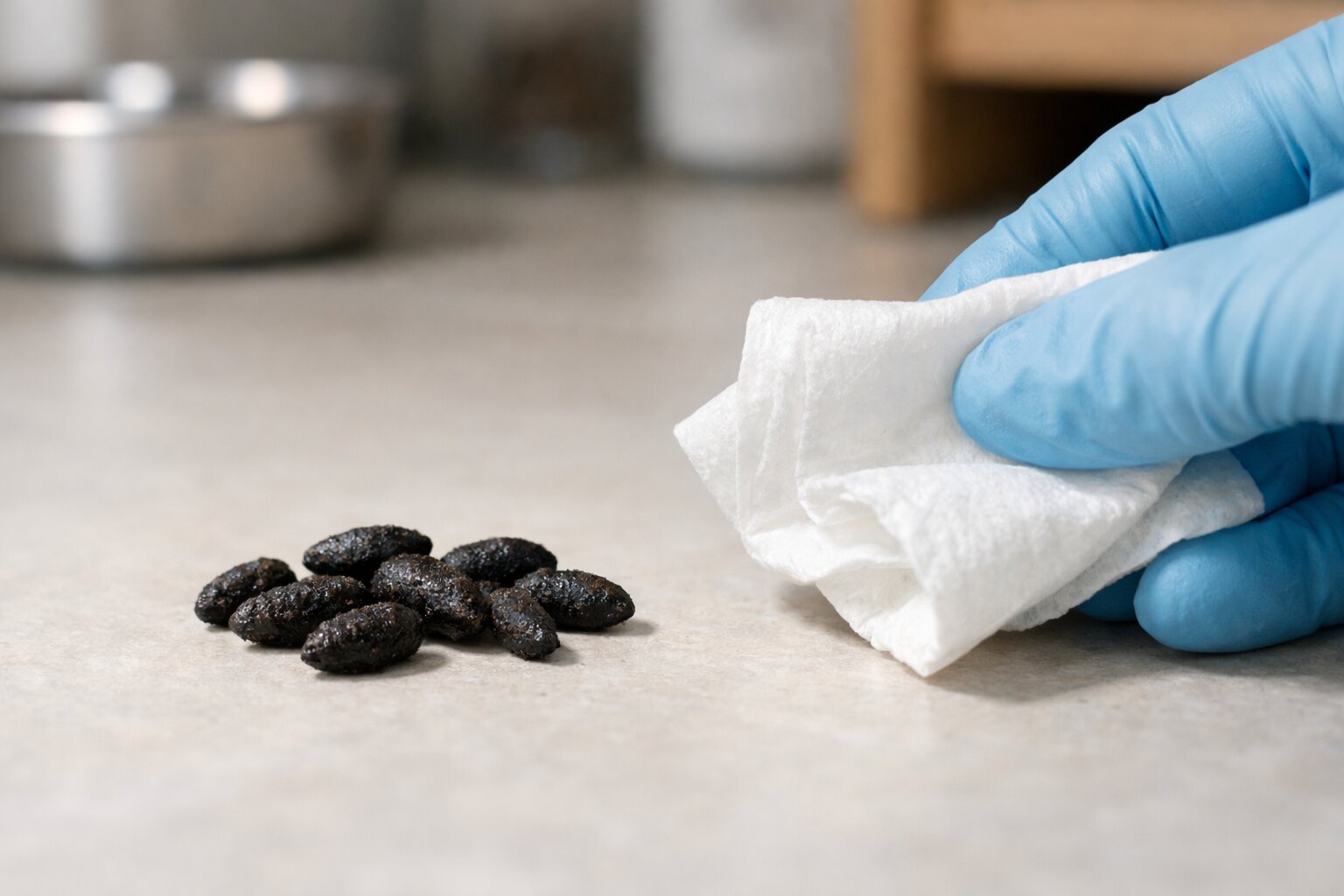
Table Of Content
- Introduction
- What Does Rat Poop Look Like?
- Rat Droppings vs Mouse Droppings
- Where Are Rat Droppings Usually Found?
- Why Rat Droppings Are a Warning Sign
- Are Rat Droppings Dangerous?
- How to Safely Clean Rat Droppings
- Signs You May Have a Rat Infestation
- How to Get Rid of Rats in Your Home
- How to Prevent Rats from Coming Back
- Common Mistakes to Avoid
- When to Call Pest Control
- Final Thoughts
Rat droppings are small, dark, pellet-shaped and usually about 12–20 mm long with blunt or slightly pointed ends. Fresh droppings appear shiny and moist, while older ones become dry and crumbly. They are commonly found near food sources, along walls, or in hidden corners. Identifying rat droppings early is important, as they can indicate an active infestation and may pose health risks if not handled properly.
Discovering mysterious droppings in your home can be alarming. Knowing how to correctly identify rodent droppings is the very first step in taking back control of your space. In this comprehensive guide, we will break down exactly what rat poop looks like, how it differs from other pests, and the safest ways to clean it up.
What Does Rat Poop Look Like?
When trying to figure out what type of pest has invaded your home, proper rat droppings identification is crucial. Rat poop has several distinct characteristics that make it easy to spot once you know what to look for.
Typically, rat droppings are about 12 to 20 mm in length roughly the size of an olive pit or a large grain of rice. They are generally oval or capsule-like in shape, often featuring blunt or slightly rounded ends depending on the specific species of rat. For instance, Norway rat droppings are blunt, while Roof rat droppings are slightly more pointed.
In terms of colour, these droppings are usually dark brown to almost black, though this can vary slightly depending on the rat's recent diet.
Fresh vs Old Rat Droppings
One of the most important aspects of how to identify rats is determining how long they have been in your home. You can often tell if you have a current, active infestation by observing the texture and appearance of the feces.
- Fresh droppings: These will appear dark, soft, and have a wet or glossy look to them. They are pliable and easily squished (though you should never touch them with bare hands).
- Old droppings: Over time, the moisture evaporates. Old feces become dull, greyish, brittle, and will crumble easily like dust.
Fresh rat droppings are usually dark, moist, and slightly shiny.
Rat Droppings vs Mouse Droppings
A common issue homeowners face is confusing rat poop with mouse poop. Because both are rodents, their waste looks similar at first glance, but there are vital differences. Understanding mouse vs rat droppings will dictate the type of traps you use and the scale of the pest control home intervention required.
Rats are significantly larger than mice, and their waste reflects this. While a mouse might leave behind dozens of tiny specks that look like black seeds, a rat leaves behind fewer, much larger, and thicker pellets.
Here is a quick reference table to help you distinguish between the two:
| Feature | Rat Droppings | Mouse Droppings |
|---|---|---|
| Size | Larger (12–20 mm) | Smaller (3–8 mm) |
| Shape | Capsule-shaped with blunt ends | Spindle-shaped with pointed ends |
| Quantity | Fewer, usually scattered | Many, often heavily clustered |
| Location | Along walls, corners, under appliances | Inside cabinets, drawers, cupboards |
If you are seeing waste that is the size of a standard staple, you are likely dealing with mice. If the droppings are closer to the size of a pumpkin seed or a raisin, you are dealing with rats. Recognizing these distinct features ensures you target your rodent infestation effectively from day one.
Where Are Rat Droppings Usually Found?
Rats are creatures of habit. They prefer to stay out of sight, traveling along the edges of rooms and avoiding wide-open spaces. Because they leave droppings constantly as they forage, looking in the right places will quickly confirm their presence.
You will typically find rat poop in hidden, dark, and undisturbed areas of the house. Common hotspots include:
- Inside kitchen cabinets and deep pantry shelves
- Under sinks and around plumbing fixtures
- Near indoor and outdoor garbage bins
- Along baseboards and walls
- Behind heavy, warm appliances like refrigerators and ovens
- In dark, rarely visited spaces like attics, basements, and crawlspaces
Rats tend to travel along walls, so droppings often appear in lines or trails.
Because of this wall-hugging behavior (known as thigmotaxis), you will rarely find rat feces right in the middle of a room. Instead, look for distinct trails of pellets running tightly against baseboards or tucked away into corners.
Why Rat Droppings Are a Warning Sign
Finding even a single rat dropping should be treated as an urgent warning sign. Rats do not casually visit a home; if they are leaving waste behind, it means they have found a reliable food source and safe shelter.
Droppings are the most obvious indicator of an active infestation. Where there is poop, there is usually a nest nearby. Rats are highly social creatures, meaning if you have one, you almost certainly have more. Furthermore, rats possess an astonishingly rapid reproduction rate. A single female rat can have up to six litters a year, with up to a dozen pups per litter. Ignoring these early warning signs can allow a minor problem to explode into a massive, costly infestation in just a matter of months. Understanding how much rodent control costs can help you act early and avoid higher expenses later.
Are Rat Droppings Dangerous?
Many homeowners wonder if simply having rodent waste in the house is a health hazard. The short answer is yes. Rodent hygiene risks are well-documented, and rat waste should be treated as a biohazard.
While finding a dropping won't immediately harm you, rat feces can carry and transmit severe bacteria and pathogens, including Salmonella, Leptospirosis, and E. coli. If the droppings dry out and crumble, sweeping or vacuuming them can send pathogen-laced dust particles into the air, which can be inhaled by humans and pets.
Additionally, rats often crawl over food preparation areas, kitchen counters, and pantry shelves, leaving microscopic traces of urine and feces behind. This easily contaminates human food and eating surfaces, dramatically increasing the risk of illness. The danger and risk of infection increase with prolonged exposure to these contaminated areas.
Avoid direct contact with rodent droppings and always clean them safely.
How to Safely Clean Rat Droppings
If you have confirmed the presence of rat poop, you must prioritize safe rat droppings cleanup. Never pick them up with your bare hands, and never use standard dry cleaning methods. Follow this step-by-step process to protect your household from harmful bacteria.
Step 1 – Wear Protective Gear
Before you even approach the affected area, you must protect yourself. Put on a pair of thick rubber or disposable latex gloves. Because rodent droppings can release airborne pathogens when disturbed, it is highly recommended to wear a secure face mask (like an N95 respirator) to prevent accidental inhalation.
Step 2 – Do Not Sweep or Vacuum
Your first instinct might be to grab a broom or a vacuum cleaner to suck up the mess quickly. This is the most dangerous thing you can do.
Sweeping can release harmful particles into the air.
Vacuum cleaners exhaust air out the back, which can blow microscopic, contaminated dust particles throughout your home. Brooms have a similar effect, stirring up dry, dangerous dust.
Step 3 – Disinfect the Area
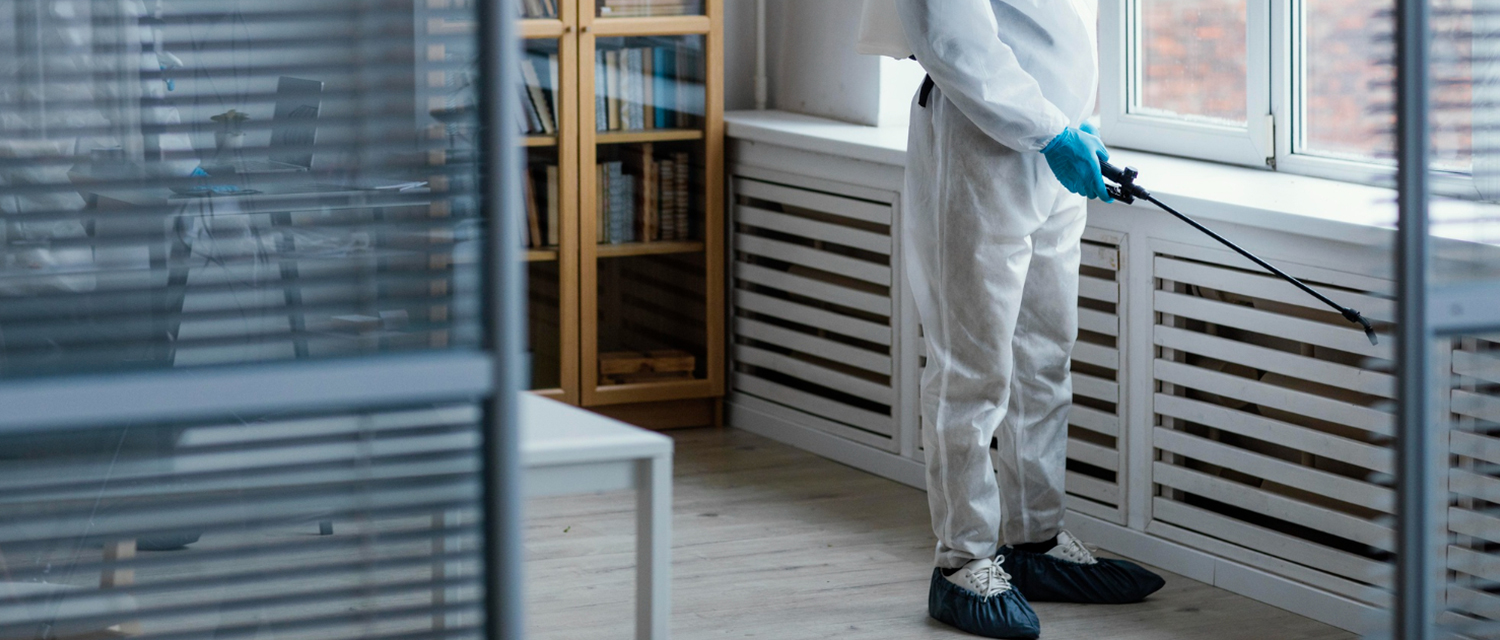
Instead of dry sweeping, you need to neutralize the area with moisture. Use a commercial disinfectant spray or a DIY solution of 1 part bleach to 10 parts water. Generously spray the droppings and the surrounding area until they are completely soaked. Let the disinfectant sit for at least 5 to 10 minutes. This essential step kills viruses and bacteria while preventing dust from becoming airborne.
Step 4 – Remove Droppings Safely
Once the droppings are soaked and the pathogens are neutralized, use disposable paper towels to wipe them up. Pick up the wet droppings and the paper towels and place them immediately into a heavy-duty plastic garbage bag. Seal the bag tightly, and place it in an outdoor trash bin.
Step 5 – Clean and Wash Hands
Once the physical waste is gone, spray the entire surface area with the disinfectant one more time. Wipe it down clean to ensure all lingering bacteria and invisible urine traces are eradicated. Finally, remove your gloves, throw them in the trash, and wash your hands thoroughly with soap and warm water for at least 20 seconds.
Signs You May Have a Rat Infestation
While identifying rat droppings is often the first clue, it is rarely the only one. If you have recognized the poop, look around your home for these other common rat infestation signs:
- Scratching Noises: Rats are nocturnal. Hearing scratching, scurrying, or squeaking inside your walls, ceilings, or under floorboards at night is a strong indicator.
- Gnaw Marks: Rats have teeth that grow continuously, forcing them to chew on things to file them down. Look for fresh, rough gnaw marks on wood trim, drywall, plastic pipes, and even electrical wiring.
- Greasy Rub Marks: Because rats have poor eyesight, they navigate by rubbing their bodies against walls. Over time, the dirt and natural oils (sebum) from their fur leave dark, greasy smudges along baseboards and entry holes.
- Nests: Rats build nests in dark, secluded spots using shredded paper, insulation, fabric, and dried plant matter. Finding these materials piled up in an attic or behind an appliance is a major red flag.
How to Get Rid of Rats in Your Home
Once you have identified the pest and safely cleaned the waste, it is time to eradicate the problem. For a complete step-by-step approach, you can also follow this detailed guide on how to get rid of rodents effectively.
First, remove food sources. Rats are incredibly resourceful foragers. Store all pantry items, pet food, and birdseed in heavy-duty, airtight plastic or glass containers. Ensure that your kitchen garbage cans have tight-fitting lids and that you wipe down counters nightly so no crumbs are left behind.
Next, seal entry points. Walk around the perimeter of your house and look for any gaps, cracks, or holes. Rats can squeeze through holes as small as a quarter. Use steel wool and heavy-duty silicone caulk to plug these gaps, as rats cannot chew through steel.
Finally, set up traps or bait. Snap traps remain one of the most effective and humane DIY pest control home methods. Place them tightly against the walls where you previously found the droppings. Bait them with peanut butter or chocolate. It is crucial to maintain cleanliness throughout this process, as removing competing food sources forces the rats to interact with your traps.
How to Prevent Rats from Coming Back
Eradicating an infestation is only half the battle. To ensure your home stays rodent-free permanently, you must adopt strong preventative habits.
- Seal gaps and cracks: Regularly inspect your home's foundation, roofline, and areas where utility pipes enter the house. Fix broken window screens and install door sweeps to block easy entry.
- Proper waste disposal: Keep your outdoor garbage bins far away from your house. Never leave bags of trash sitting on the porch or patio overnight.
- Store food securely: Do not leave unwashed dishes in the sink, and ensure all dried goods are locked away in chew-proof containers.
- Regular cleaning: Vacuuming floors, wiping down dining areas, and thoroughly cleaning behind kitchen appliances removes the hidden crumbs that attract pests.
- Reduce clutter: Rats love hiding. Clear out messy basements, organize the garage, and keep firewood stacked at least 20 feet away from the home's exterior to remove potential nesting sites.
Common Mistakes to Avoid
When dealing with a rat problem and the resulting droppings, homeowners often make errors that prolong the infestation or put their health at risk. Avoid these frequent mistakes:
- Touching droppings without protection: Never pick up rodent feces with bare hands.
- Sweeping or vacuuming: This is the fastest way to contaminate the air in your home.
- Ignoring early signs: Assuming a single dropping is a "one-off" visitor gives the colony time to multiply.
- Not sealing entry points: Trapping rats is useless if the hole they are using to get inside remains wide open.
- Incomplete cleaning: Failing to disinfect the area allows lingering urine and pheromones to attract new rats to the same spot.
When to Call Pest Control
While DIY trapping and cleaning are often sufficient for minor issues, there are times when professional intervention is non-negotiable.
You should call a pest control expert if you are dealing with a large infestation that does not respond to traps. If you experience repeated sightings of live rats during the day, which suggests the nest is so overcrowded they are forced to forage in daylight, you need professional help. Furthermore, if you suspect hidden nests deep within your walls or HVAC system, or if you have severe health concerns due to extensive contamination, an exterminator has the tools, training, and specialized equipment to handle the problem safely and thoroughly. Before hiring, it’s helpful to understand rodent control pricing in Australia to plan your budget effectively.
Final Thoughts
Identifying rat droppings early helps prevent larger infestations and health risks. With proper cleaning and prevention, you can keep your home safe and pest-free.
By knowing exactly what to look for, utilizing safe cleanup protocols, and securing your home against future entry, you can protect your property and your family from the dangers of rodent infestations.


Answers to Your Common Questions
Fresh droppings are moist and shiny. They will appear very dark black or brown and have a pliable, putty-like consistency, whereas older droppings become grey, dry, and easily crumble into dust.
They can carry bacteria and should be handled carefully. Feces and urine left behind by rats can transmit diseases like Salmonella and Leptospirosis, making them a significant health hazard if improperly handled.
No, it can spread harmful particles into the air. The exhaust from a vacuum cleaner or the sweeping motion of a broom can disturb dry droppings, releasing microscopic pathogens that can be easily inhaled.
Multiple droppings in one area usually indicate active rats. Because rats poop constantly as they travel, finding a cluster or trail of droppings means a rat is actively foraging in your house and likely nesting nearby.
Yes, they leave droppings frequently along their paths. They have rapid digestive systems and leave a continuous trail of waste as they move from their nests to their food sources.
Clean safely and inspect for entry points. Wear gloves and a mask, spray the droppings with disinfectant, wipe them up with paper towels, and then begin looking for the gaps or holes the rodents used to get inside.
YOU MIGHT ALSO BE INTERESTED IN
Capital Cities
- Pest Control Services Services in Melbourne
- Pest Control Services Services in Brisbane
- Pest Control Services Services in Sydney
- Pest Control Services Services in Adelaide
- Pest Control Services Services in Perth
- Pest Control Services Services in Canberra
- Pest Control Services Services in Hobart
- Pest Control Services Services in Darwin