Red Flags That Indicate a Fake or Uninsured Tradie
Hiring a tradie should be simple. You hop onto a reputable platform, check their license, ABN, and insurance details, compare quotes, and boom, job done. But real talk? Even with solid verification systems in place, a few bad apples still slip through. Some tradies operate without proper insurance, some ghost mid-job, and some simply aren’t who they claim to be.
So, how do you protect your home, your money, and your sanity? Here’s the ultimate homeowner-friendly guide to spotting red flags and choosing the real deal.
Red Flags To Avoid A Tradie
You can avoid a fake or uninsured business with the following red flags.
1. They Dodge Questions About Licenses or Insurance
If they get weirdly defensive or vague when you ask about proof of license or insurance, that’s a giant red flag waving in 4K. A legit tradie will happily send copies, screenshots, or verification links, usually within minutes.
What to do instead:
- Ask for the current license and insurance certificates.
- Verify the documents through state government portals.
- Make sure the insurance covers the type of work you’re hiring them for.
2. Their Online Presence Looks Suspicious
Fake tradies often have:
- No website
- No traceable Google profile
- No consistent business name
- Stock photos that scream: “I was downloaded from page 1 of Shutterstock”
How to investigate:
- Google their business name + “reviews”
- Look for matching email, ABN, business name, and contact details.
- Check if the logo, photos, and brand appear consistently across platforms
If everything looks like it was assembled in 10 minutes, abort the mission.
3. Quotes That Are Too Cheap (Like, Scary Cheap)
We all love a bargain, but if someone quotes half of what the market normally charges, it’s usually because:
- They’re uninsured
- They’re unlicensed
- They’re planning to switch up the price later.
- They won’t finish the work (or start it)
Get at least 3 quotes. If one is suspiciously low, dig deeper instead of celebrating too early.
4. No Written Quotes or Contracts
If a tradie says, “Let’s keep it simple, cash and handshake,” you should hear warning sirens.
A proper tradie will:
- Give a written quote
- List materials, labour, inclusions, and exclusions
- Provide timelines
- Offer a contract for bigger jobs
5. Their ABN Doesn’t Match Their Name or Business
This is one of the sneakiest tricks. They give you a legit ABN, just not theirs.
How to verify:
- Search the ABN on the official ABN Lookup website.
- Check whether the name, address, and entity type match the tradie’s details.
If nothing matches, that’s sketchy energy right there.
6. They Pressure You for Deposits
Huge red flag: “I need a 50% deposit upfront, or I can’t lock in your job.” Deposits are normal, but anything above 10–20% (depending on the job and state rules) is questionable.
If they want:
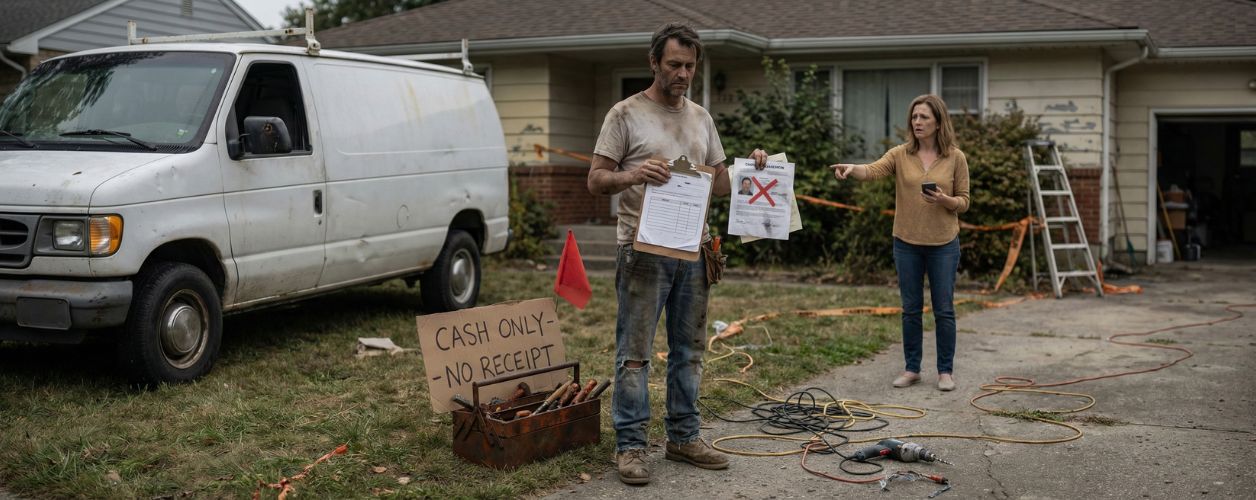
- Cash only
- A deposit is required before providing documents.
- Payment sent to an account under a different name
Run.
7. They Can’t Provide Real References
Real tradies have real customers. Fake or uninsured tradies, well, they have “my cousin said I’m awesome.”
What to do:
Ask for:
- Recent project pics
- At least two references
- Location-specific jobs they’ve done
Then you can call the references for a quick 2-minute talk that can save thousands.
8. They Avoid On-Site Inspections
When someone gives a quote without seeing the job in person or on a video call, it’s either laziness or a scam. A genuine tradie wants to inspect so they can quote accurately and avoid surprises later.
What Else Can Homeowners Do to Protect Themselves?
Here’s where we ditch the old advice and bring in smarter, 2026-ready strategies homeowners can start using today:
1. Use Platforms - But Still Verify Independently
Platforms do a great job checking licenses, ABNs, and insurance. But you should:
- Re-verify documents before final approval
- Ask for updated insurance if the project spans months
Trust the system, just don’t outsource all your judgment to it.
2. Ask for a Short Video Call
Scammers hate video calls. Legit tradies don’t. A 2-minute call lets you:
- Confirm they’re real
- Ask questions directly
- See whether they know what they’re talking about
Easy, quick, and super effective.
3. Check Their Tools of Communication
Tradies using:
- Random Gmail addresses
- No-surname WhatsApp accounts
- Phone numbers with frequent changes
They are more likely to be unreliable.
A real business usually has:
- A business email
- A consistent number
- A proper signature in emails/messages
4. Ask About Their Work Process
A genuine tradie can explain:
- The steps involved
- Expected timeline
- The materials they use
- Safety practices
Fake tradies usually get stuck after Step 1.
5. Create a Mini Agreement Before Work Starts
Nothing fancy, even a simple document that includes:
- Scope of work
- Timeline
- Payment stages
- Warranty terms
- Cleanup responsibilities
This can save you from arguments and disappearing acts.
Final Words
Homeowners shouldn’t have to turn into detectives to hire a good tradie, but here we are. And while platforms do their best to kick out the fakes, the real protection starts with awareness, verification, and smart decision-making.
By combining platform checks with your own due diligence, you’ll filter out the sketchy ones and land a tradie who’s: licensed, insured, professional, fair with pricing and actually shows up.
Answers to Your Common Questions
YOU MIGHT ALSO BE INTERESTED IN