How Much Does Furniture Restoration Cost?
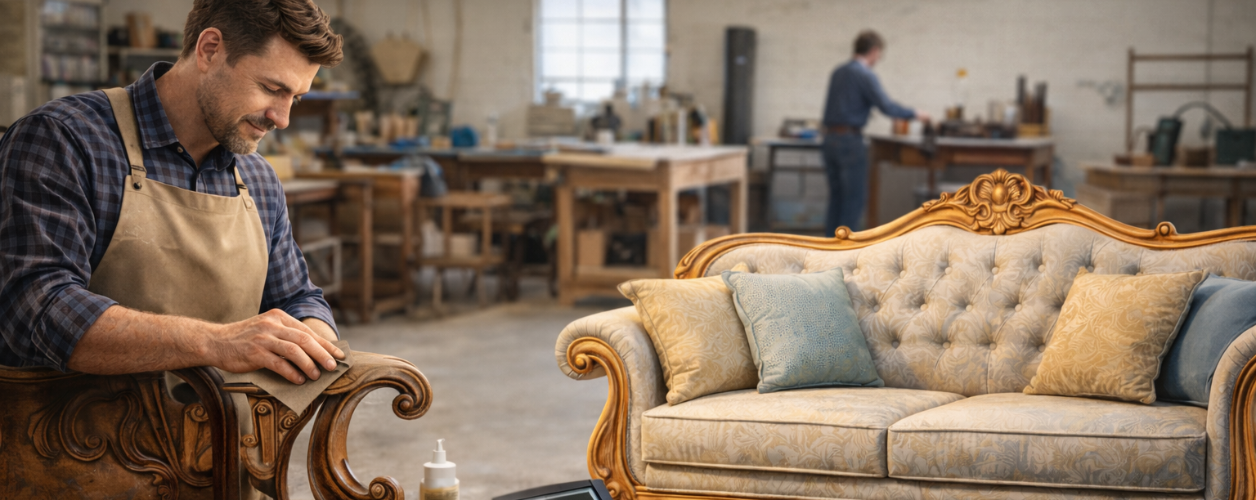
Furniture Restoration Cost Range: $150 to $3,500+
Furniture restoration costs vary widely. Simple chair repairs start around $150, while full dining table restoration can range from $900 to $2,800. Reupholstering a sofa can cost $2,000 to $3,500+ in labour alone, excluding fabric costs.
Table Of Contents
- Introduction
- How Furniture Restoration is Priced in Australia
- Typical Cost Ranges by Furniture Type
- What Is Included in a Standard Restoration Quote?
- Main Factors That Influence Total Costs
- Technically Possible vs. Economically Practical
- Common Misconceptions About Furniture Restoration
- How to Get an Accurate Restoration Quote
- How to Decide if Restoration is Worth the Cost
Restoring furniture can preserve craftsmanship and keep high-quality materials out of landfill. Costs vary widely depending on the piece's condition, the materials required, and the intensity of the labour. In this guide, we explain furniture restoration costs in Australia, how professionals price their services, and what to expect when you request a quote.
How Furniture Restoration is Priced in Australia
Let’s break down exactly how Australian furniture restorers calculate the total cost of bringing a piece back to life. The final invoice you receive reflects specialized trade skills, workshop overheads, and the specific materials applied to your furniture. Professionals do not guess these numbers; they use strict, labour-driven pricing models.
WHAT Furniture Restoration Involves
Furniture restoration involves dismantling, repairing, and refinishing an existing piece to return it to its original, functional condition. This process requires stripping away old, degraded finishes using harsh chemical solvents or precise manual sanding. Restorers then address the structural integrity by disassembling loose joints, scraping away failed animal glues, and rebuilding the frame with modern, high-strength adhesives.
The process often demands complex veneer repair, where specialists cut and splice new timber sheets to replace chipped or water-damaged sections. Finally, the restorer applies a new finish, such as a traditional French polish, a durable two-pack polyurethane, or a hand-rubbed hardwax oil.
WHY Restoration Costs Vary Widely
Furniture restoration costs in Australia vary depending on labour hours, materials, and the complexity of repairs. Labour is the absolute largest component of any restoration quote. Stripping a flat, solid timber table takes significantly less time than stripping a chair with intricate, turned spindles and carved details.
Material types also dictate the price drastically. Restoring solid Australian hardwoods like Jarrah or Tasmanian Oak is straightforward because the wood can handle heavy sanding. Conversely, mid-century modern pieces often feature paper-thin teak veneers that require painstaking, delicate hand-sanding to avoid burning through to the substrate. Skill level drives the cost further; antique conservation requires niche techniques that standard furniture repairers do not possess.
HOW Restorers Quote and Price Work
When you receive a quote, Australian restorers typically price jobs based on a projected hourly rate multiplied by the estimated time the job will take. The average hourly rate for a skilled furniture restorer or upholsterer in Australia sits between $80 and $150 per hour.
Instead of charging you by the hour directly, most professionals present a fixed-price quote based on their initial assessment. This fixed price covers their workshop time, consumable materials like sandpaper and solvents, and the final topcoats. If a restorer discovers hidden damage after stripping the piece—such as active woodworm or severe internal rot—they will pause work and issue a revised quote for the additional structural repair.
Typical Cost Ranges by Furniture Type and Restoration Method
Let’s examine the common types of furniture restoration in Australia and the associated costs. We separate cosmetic refinishing from full structural restoration to give you a highly accurate picture of potential expenses.
Timber Dining Tables
Timber dining tables are the most frequently restored items in Australian homes. Because they feature large, flat surfaces, the bulk of the cost comes from the sheer square meterage of stripping and finishing required.
A basic cosmetic refinish involves removing the existing clear coat, lightly sanding out superficial scratches, and applying a new protective seal. A full restoration involves repairing deep gouges, fixing water marks, re-gluing the table base to ensure structural integrity, and applying specialized finishes like a high-gloss French polish.
Table: Average Timber Dining Table Restoration Costs (AUD)
| Service Type | Description | Typical Cost Range |
|---|---|---|
| Cosmetic Refinishing (Small Table) | Strip, sand, and clear coat (seats 4) | $400 - $800 |
| Cosmetic Refinishing (Large Table) | Strip, sand, and clear coat (seats 8+) | $800 - $1,500 |
| Full Restoration (Small Table) | Structural repair, deep stain removal, refinish | $900 - $1,400 |
| Full Restoration (Large Table) | Structural repair, deep stain removal, refinish | $1,500 - $2,800 |
| French Polishing Upgrade | Traditional hand-rubbed shellac finish | Add $600 - $1,200 |
Pro Tip: If your table features an extension leaf, you must bring all pieces to the workshop. Restorers must finish the main table and the extension leaves simultaneously to ensure a perfect colour match across the entire surface.
Timber Chairs and Seating
Dining chairs frequently suffer from compromised structural integrity due to years of being rocked back and forth. The joints loosen, the dowels snap, and the original glue turns to brittle dust.
Restoring a chair often costs disproportionately more than its physical size suggests. The restorer must label every component, carefully knock the frame apart with a rubber mallet, clean every individual mortise and tenon joint, and clamp the entire assembly overnight. If the chair features intricate carvings or curved backs, the sanding labour increases exponentially.
Table: Average Timber Chair Restoration Costs (AUD)
| Service Type | Description | Typical Cost Range |
|---|---|---|
| Structural Re-gluing Only | Dismantle, clean joints, re-glue, clamp (per chair) | $150 - $250 |
| Full Timber Refinish | Strip old finish, sand, apply new topcoat (per chair) | $200 - $400 |
| Complete Restoration | Re-glue frame and full timber refinish (per chair) | $350 - $650 |
| Minor Drop-in Upholstery | Replace fabric and foam on a removable seat pad | $80 - $150 + Fabric |
Crucial: Do not attempt to fix a loose chair by injecting PVA glue or epoxy into an assembled, wobbly joint. This does not work, and the restorer will charge you extra labour hours to scrape out your failed repair attempt.
Upholstered Sofas and Armchairs
Upholstery restoration is a distinct trade separate from timber refinishing. When you restore an upholstered sofa or armchair, you pay for both the tradesperson’s labour and the meterage of the fabric you select.
Full reupholstery is highly labour-intensive. The upholsterer must meticulously strip hundreds of industrial staples, remove degraded foam, and inspect the internal timber frame. They then replace broken zigzag springs or sagging webbing before cutting and sewing the new fabric to fit the exact contours of the piece.
Table: Average Reupholstery Costs (AUD - Labour Only)
| Furniture Type | Description | Labour Cost Range | Fabric Required (Approx.) |
|---|---|---|---|
| Single Armchair | Strip, repair springs/foam, reupholster | $800 - $1,500 | 4 - 6 metres |
| Wingback Chair | Complex detailing, deep buttoning | $1,200 - $2,200 | 6 - 8 metres |
| 2-Seater Sofa | Strip, repair springs/foam, reupholster | $1,500 - $2,500 | 10 - 14 metres |
| 3-Seater Sofa | Strip, repair springs/foam, reupholster | $2,000 - $3,500 | 14 - 18 metres |
Note: Premium upholstery fabrics in Australia cost between $60 and $200+ per linear metre. You must factor this substantial material cost on top of the labour estimates provided in the table above.
Cabinets, Sideboards, and Dressers
Case goods like sideboards, dressers, and display cabinets require specialized skills, particularly regarding veneer repair and hardware alignment. Mid-century modern sideboards are highly sought after in Australia, but they frequently present with deep scratches, missing veneer chips, and faded timber tones.
Restoring these pieces involves removing all doors, drawers, and brass hardware. The restorer must patch damaged veneer using matching timber species, blend the colour using specialized stains, and rehang the doors to ensure they sit perfectly square.
Table: Average Cabinet and Sideboard Restoration Costs (AUD)
| Service Type | Description | Typical Cost Range |
|---|---|---|
| Cosmetic Polish (Sideboard) | Clean, light scuff, apply reviving oil/wax | $400 - $800 |
| Full Refinish (Medium Cabinet) | Strip, veneer repair, sand, new topcoat | $900 - $1,600 |
| Full Refinish (Large Sideboard) | Strip, extensive veneer repair, new topcoat | $1,800 - $3,500 |
| Hardware Restoration | Clean, polish, and lacquer original brass handles | $150 - $300 |
What Is Included in a Standard Restoration Quote?
Understanding the specific line items on an Australian furniture restoration quote helps you avoid surprise charges. Let’s look at exactly what materials and tasks restorers standardly include, and what they typically exclude.
Standard Inclusions You Should Expect:
- Initial structural assessment and dismantling of the furniture.
- All chemical stripping agents, neutralizers, and consumable abrasives.
- Minor surface repairs, including filling small dents or executing basic colour matching.
- Application of the agreed-upon topcoat (e.g., polyurethane, lacquer, or oil).
- Reassembly of the piece and basic alignment of doors or drawers.
Typical Exclusions (Always Read the Fine Print):
- Transport and freight. Moving heavy furniture to and from the workshop often costs an additional $100 to $300 each way depending on your location.
- Sourcing rare, replacement antique hardware if the original handles are missing or broken beyond repair.
- The raw cost of upholstery fabric, leather, or premium replacement feather cushions.
- Significant structural rebuilding, such as woodturning a brand-new table leg to replace a shattered original.
Main Factors That Influence Total Furniture Restoration Costs
Beyond the size of the furniture, several specific variables dictate the final number on your quote. Let’s examine the primary factors that cause restoration costs to fluctuate.
Condition and Damage Level
A table with a sun-faded finish costs significantly less to restore than a table left outside in the rain for a year. Severe water damage causes timber to swell, joints to fail, and veneer to peel away from the substrate. Restorers must spend hours repairing this foundational damage before they can even begin the cosmetic sanding and finishing process. Pet damage, such as deeply chewed chair legs or cat-scratched upholstery, also requires expensive, localized rebuilding.
Material Type and Veneer vs. Solid Timber
The underlying material of your furniture aggressively dictates the restoration process. Solid timber allows restorers to use heavy belt sanders to quickly remove deep gouges and stains, keeping labour costs down.
Veneered furniture behaves entirely differently. Veneer is a slice of real wood often less than 1mm thick, glued over cheaper pine or particleboard. Restorers must strip veneered pieces using slower chemical methods and hand-sand them carefully. If they sand too aggressively, they will destroy the piece. This intense, delicate labour directly increases your total cost.
Complexity of Details and Shapes
Flat surfaces process quickly; curves and crevices do not. A minimalist, square-edged coffee table is fast to strip and finish. A Victorian-era hall stand featuring ornate floral carvings, turned spindles, and intricate molding requires a restorer to remove old varnish using small dental picks and wire brushes. You pay directly for the hours spent navigating these complex physical details.
The Desired Finish
The chemical topcoat you select impacts both the material cost and the application time. Spraying a piece with modern, two-pack polyurethane is relatively fast if the workshop possesses a professional spray booth. Applying a traditional French polish requires a restorer to apply dozens of microscopic layers of shellac by hand using a fabric pad over several days. French polishing produces a distinct, mirror-like antique finish, but the labour involved makes it the most expensive topcoat available.
Technically Possible vs. Economically Practical
When assessing furniture, you must explicitly distinguish between what a restorer can technically achieve and what actually makes financial sense for you to commission.
What is Technically Possible:
A highly skilled restorer can technically rebuild almost anything. They can splice new timber into a rotted cabinet base, hand-carve a missing claw-foot leg to match the other three, and reverse severe burn marks on a dining table. If you possess an heirloom piece with immense sentimental value, or a verified, rare antique worth thousands of dollars, technical intervention is usually justified.
What is Economically Practical:
Just because a restorer can fix a piece does not mean you should pay them to do it. Restoring a mass-produced, $300 flat-pack dining table from a modern retail store will cost you a minimum of $800 in trade labour. Economically, this makes absolutely zero sense.
The only exception is if you want to save a high-quality, solid timber piece built 30 to 50 years ago. An equivalent new solid timber table today often retails for over $3,000. Paying $1,500 to restore an older, structurally superior table is a highly practical financial decision.
Common Misconceptions About Furniture Restoration
Homeowners routinely approach restoration workshops with incorrect assumptions about the process. Let’s address and correct the most prevalent misconceptions in the Australian market explicitly.
Misconception 1: Restoration is always cheaper than buying new replacement furniture.
The reality: Restoration is almost never cheaper than buying imported, mass-produced modern furniture. You are paying for localized, highly skilled Australian trade labour, not automated factory assembly. Restoration only becomes cost-effective when you compare the quote against the price of buying brand-new, bespoke, solid-timber furniture or high-end designer upholstery.
Misconception 2: All restorers charge the same rates for the exact same work.
The reality: Quotes vary drastically based on the specific techniques the workshop employs. A budget restorer might quote $400 to quickly sand a table and brush on a thick layer of hardware-store varnish. A master restorer will quote $1,200 to meticulously strip the same table, neutralize the grain, apply an exact stain match, and seal it with a commercial-grade, sprayed lacquer. You get exactly what you pay for in durability and finish quality.
Misconception 3: You can easily just paint over old finishes without stripping them first.
The reality: While technically possible to paint over old furniture, professional restorers refuse to do this. Paint applied over degrading, oily, or flaking varnish will quickly chip and peel off. True restoration requires stripping the piece back to the bare substrate to ensure the new finish binds perfectly to the timber fibres.
How to Get an Accurate Restoration Quote
Let’s look at the pragmatic steps you must take to ensure you receive an accurate, reliable quote from an Australian furniture restoration workshop. Do not simply call a restorer and ask, "How much to fix a chair?" Provide them with specific visual data to ensure you get a realistic price.
- Take Comprehensive Photographs: Take clear, well-lit photos of the entire piece of furniture. Then, take extreme close-up photos of specific damage points, such as water rings, deep scratches, peeling veneer, or wobbly joints.
- Measure the Dimensions: Provide the exact length, width, and height of the piece in millimetres. Restorers use these dimensions to calculate the exact volume of stripping chemicals and topcoats required for the job.
- Identify the Brand or Timber (If Known): Check the underside of tables or the inside of drawers for manufacturer stamps (like Parker, Chiswell, or TH Brown). Knowing the brand or the specific timber species immediately tells the restorer what manufacturing techniques and materials they are dealing with.
- Define Your Expectations: Tell the restorer exactly what you want. State clearly if you want a perfect, pristine factory finish, or if you prefer to retain the "patina" and minor dents to keep the piece's antique character.
- Assess Transport Logistics: Decide whether you will drop the furniture off at their workshop yourself, or if you need them to include pickup and delivery in the final quote.
How to Decide if Restoration is Worth the Cost
Before you approve a quote, evaluate the true value of the furniture. Turn the piece upside down and inspect the construction. If you see solid timber blocks, dovetail joints in the drawers, and heavy steel screws, the piece possesses high intrinsic quality. These are the hallmarks of furniture designed to last generations, and they heavily justify restoration costs.
Conversely, if you see chipped particleboard, flimsy staples, and plastic corner brackets, the foundation is inherently weak. Do not invest premium restoration labour into low-grade materials.
By understanding the distinct differences between cosmetic refinishing and structural rebuilding, you protect yourself from unrealistic expectations. Choose a restoration path that matches the quality of your furniture, respect the intense labour required to strip and finish timber properly, and always prioritize structural integrity before paying for superficial cosmetic upgrades.
Costs of various services and materials in this cost guide should be taken as estimates. These depend on location, preference and demands in the market.

YOU MIGHT ALSO BE INTERESTED IN