Where Do Maggots Come From?
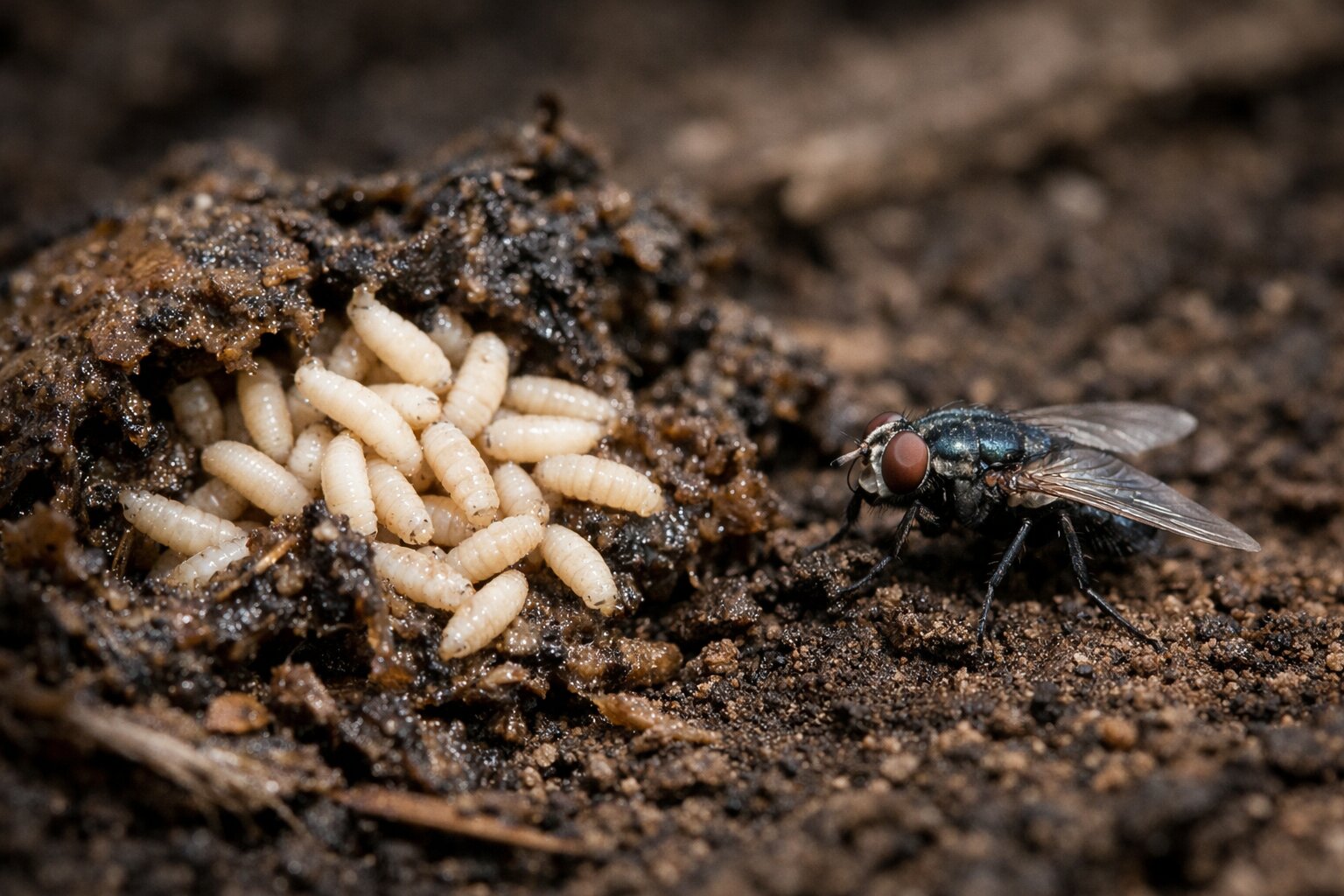
Table Of Content
- Introduction
- What Are Maggots?
- Where Do Maggots Come From?
- The Lifecycle of Maggots (Step-by-Step)
- Why Do Maggots Appear So Suddenly?
- What Attracts Flies to Lay Eggs?
- Are Maggots Dangerous?
- How to Get Rid of Maggots Quickly
- How to Prevent Maggots in Your Home
- Common Mistakes to Avoid
- When to Call Pest Control
- Final Thoughts
Maggots come from fly eggs. When flies land on food waste, garbage, or decaying organic matter, they lay tiny eggs that hatch into maggots within 8–24 hours. These larvae feed and grow quickly before turning into pupae and eventually adult flies. Maggots usually appear where there is moisture, food residue, or poor hygiene, such as bins, drains, or spoiled food.
Understanding the maggot lifecycle is the ultimate key to stopping a maggot infestation in your home before it gets out of control. Let's explore exactly where these pests originate and how you can eliminate them for good.
What Are Maggots?
If you have ever opened a garbage can to find small, wriggling, worm-like creatures, you have encountered maggots. But what exactly are they?
Maggots are not a separate species they are the early life stage of flies.
More specifically, they are the larval stage of common fly species, such as houseflies, blowflies, and fruit flies. They have a distinct soft, tubular, and legless appearance. Most often, they are white, cream, or pale yellow in color.
A maggot's entire biological purpose during this stage of life is to consume as much energy as possible, which is why they are predominantly found buried deep in rotting organic waste. By correctly identifying these creatures as fly larvae rather than mysterious worms, you can better trace the root of the problem: adult flies finding a suitable environment in your home to reproduce.
Where Do Maggots Come From?
To answer the question of where do maggots come from, we have to look closely at the behavior of adult flies. A maggot infestation begins when a female fly detects the scent of decaying organic matter. Flies possess highly evolved sensors that allow them to smell rotting food, meats, or animal waste from great distances.
Once a fly locates a suitable food source, it lands and lays its eggs in large clusters. A single fly can lay hundreds of eggs in one sitting. Because these eggs are microscopic, they usually go entirely unnoticed. These eggs hatch incredibly fast—often within a single day and the emerging maggots begin feeding immediately on the surrounding material.
Common Places Maggots Appear
Because maggots rely on decaying organic material to survive, they are predictably found in highly specific environments. Knowing where to look is half the battle when trying to prevent maggots in your house. Keep an eye on these common areas:
- Garbage bins: Both outdoor trash cans and indoor kitchen bins are prime targets, especially if bags tear and leak liquids.
- Rotting food: Forgotten produce at the back of the pantry or uncovered leftovers.
- Kitchen waste: Food scraps particularly meat and dairy products that are not disposed of correctly.
- Drains: Kitchen sinks and floor drains can build up organic sludge, creating a perfect, moist breeding ground.
- Pet waste: Unscooped litter boxes or dog waste left in the yard can quickly become a nursery for fly larvae.
- Dead animals: A common hidden source is a deceased mouse, rat, or bird trapped inside a wall cavity or attic.
The Lifecycle of Maggots (Step-by-Step)
To truly grasp how maggots appear and how to eliminate them, you must understand the complete pest lifecycle. The transformation from an invisible egg to a buzzing adult pest is a rapid and fascinating process.
Stage 1: Egg
The pest lifecycle begins when an adult female fly finds a nutrient-rich, moist environment to deposit her eggs. Fly eggs are tiny, white, and look like miniature grains of rice, making them hard to see with the naked eye. Flies prefer to lay eggs in clusters so the emerging larvae can feed together. Depending on the temperature, these eggs hatch quickly—usually taking only 8 to 24 hours to break open.
Stage 2: Larva (Maggot Stage)
Once the eggs hatch, the pests enter the larval stage. This is the most visible stage of their early development. A maggot’s sole objective is to eat. Using hooked mouthparts, it feeds continuously on the organic material it was born into. As it feeds, the maggot grows rapidly, molting its outer skin multiple times to accommodate its expanding size. This intense feeding frenzy lasts anywhere from three to five days.
Stage 3: Pupa
After the maggot has stored enough energy, it stops eating and seeks out a dark, dry place to pupate. It burrows into the soil or retreats to the dark corners of a garbage bin. Its soft skin hardens and turns a dark brown or reddish color, forming a protective shell called a puparium. Inside this hard casing, the worm-like larva transforms into an adult fly.
Stage 4: Adult Fly
In the final stage, a fully formed adult fly breaks out of the pupal casing. It rests briefly to allow its wings to dry before flying off to find food and a mate. The female fly will then seek out rotting organic matter to lay her eggs, repeating the process.
The entire lifecycle can take as little as 5–7 days in warm conditions.
Why Do Maggots Appear So Suddenly?
One of the most frustrating aspects of dealing with these pests is how fast they multiply. Homeowners often take out the trash, only to wake up the next morning to find their bin crawling with larvae. Why do they seem to materialize out of nowhere?
Maggots seem to appear overnight because fly eggs hatch extremely quickly.
The sudden appearance is primarily an illusion. The eggs laid by adult flies are practically invisible. Because the eggs hatch in as little as 8 to 24 hours, you rarely notice the warning signs.
Furthermore, maggots experience incredibly fast growth. Once hatched, they feed non-stop, doubling in size in a matter of hours. What was a tiny, barely visible speck one afternoon becomes a plump, quarter-inch-long larva by the next day. Warm temperatures also drastically accelerate this process. During summer months, food decomposes faster, emitting stronger odors that attract flies, while the heat simultaneously speeds up the incubation period of the eggs.
What Attracts Flies to Lay Eggs?
Understanding how maggots appear requires identifying the specific attractants that draw adult flies to your home. Flies are hunting for specific environments that provide both food and moisture for their offspring.
The primary attractant is food waste. Uncovered leftovers, overripe fruit, and vegetable peelings act as a beacon. Meat scraps are especially enticing. Blowflies specifically seek out the strong odors of decomposing proteins to lay their eggs.
Sugary liquids also play a big part. Spilled soda, sticky counter rings, and unrinsed recycling bins provide excellent quick-energy meals for adult flies. Garbage bins are notoriously attractive; when trash bags leak, organic sludge pools at the bottom of the bin, combining all these attractants into one foul-smelling soup.
Additionally, moisture and damp areas are critical. Maggots need a high-moisture environment to survive and prevent themselves from drying out. Ultimately, any lapse in sanitation or instances of poor hygiene around the home—like pet waste left in the yard or overflowing trash cans—serve as open invitations for flies.
Are Maggots Dangerous?
Finding maggots in your house can be an unsettling experience, leading many to wonder if they pose a direct threat to human health. The factual answer is that maggots are generally not harmful directly. They do not bite, sting, or attack humans or pets.
However, the danger lies in the environments they inhabit. Because maggots thrive in rotting food, garbage, and animal waste, they are surrounded by harmful pathogens. As they crawl over decaying materials, they can easily spread bacteria, such as Salmonella and E. coli, to other surfaces. If maggots or adult flies contaminate food meant for human consumption, it can lead to food poisoning or intestinal issues.
Most importantly, the presence of maggots is an indicator of underlying hygiene issues that need to be addressed to maintain a sanitary home.
How to Get Rid of Maggots Quickly
When dealing with maggots in the house, swift action is essential to stop the infestation from progressing to the pupal stage. Here is a highly effective, four-step process to get rid of maggots quickly.
Step 1: Remove the Source
The first and most crucial action is to identify and remove the rotting material that attracted the flies. Whether it is a forgotten bag of food waste, spoiled meat, or a dirty litter box, you must eliminate it immediately. Seal the infested material in a heavy-duty trash bag and dispose of it in an outdoor bin away from your home's entrances.
Step 2: Kill Maggots
Once the source is removed, eradicate the remaining larvae. Pouring boiling water directly over the maggots is a fast, instant kill method. Alternatively, you can sprinkle a generous amount of salt over them, which quickly dehydrates and kills the larvae. A strong vinegar solution will also exterminate the pests while helping neutralize foul odors. Insect spray is an option, though usually unnecessary for standard indoor infestations.
Step 3: Clean the Area Thoroughly
Simply killing the visible maggots is not enough. You must clean the area thoroughly to remove microscopic fly eggs and organic residue. Scrub the bottom of garbage bins, clean your floors, and disinfect countertops using antibacterial soap or bleach. Removing lingering odors ensures adult flies will not be drawn back. However, if infestations keep recurring or the source is unclear, it may be worth understanding how much a pest inspection costs to identify hidden issues and prevent long-term problems.
Step 4: Dry the Area
Moisture control is key in preventing a recurrence. Flies actively seek out moisture to lay their eggs. After cleaning and disinfecting, use a towel to dry the inside of your bins, wipe down sinks, and ensure no standing water is left behind.
How to Prevent Maggots in Your Home
Knowing how to prevent maggots is much easier than dealing with a full-blown maggot infestation. For homeowners dealing with recurring pest issues, understanding annual pest control costs can help plan long-term prevention strategies.
- Empty bins regularly: Take out the garbage frequently, especially during the warm summer months when decomposition happens rapidly.
- Seal food waste: Never toss exposed food directly into a trash can. Seal meat scraps and dairy products in compostable liners or plastic bags before throwing them away.
- Clean drains: Regularly pour boiling water, baking soda, and vinegar down your kitchen sink to dissolve organic sludge that attracts drain flies.
- Use bin lids: Always use tightly fitted lids for both indoor and outdoor garbage cans. If flies cannot access the trash, they cannot lay eggs.
- Store food properly: Keep fresh produce in the refrigerator rather than on the counter, and store pantry items in airtight containers.
- Improve ventilation: Keep air circulating in your home and use window screens to prevent flies from entering.
- Keep surfaces dry: Wipe down counters, fix leaky faucets, and ensure that sponges are wrung out properly. Moisture is a critical component of the pest lifecycle.
Common Mistakes to Avoid
When trying to manage maggots in the bin or home, homeowners often make simple errors that lead to repeat infestations. Avoid these common mistakes:
- Ignoring the source: Spraying insect repellent on the larvae without throwing away the rotting meat ensures the problem will continue.
- Only killing visible maggots: Because fly eggs are microscopic, you must clean the surrounding area, not just target the active larvae.
- Leaving bins dirty: Just throwing away the trash bag isn't enough. Organic sludge left at the bottom of a bin will continue to attract flies.
- Not drying surfaces: Leaving bins or floors wet after cleaning creates the damp environment maggots need.
- Poor food storage: Leaving pet food out all day or keeping ripe fruit uncovered acts as a constant lure for egg-laying pests.
When to Call Pest Control
While most maggot issues can be handled with DIY methods, there are times when professional intervention is required. You should consider calling pest control experts if you experience repeated infestations despite deep cleaning your home, or if you face large outbreaks that spread across multiple rooms.
If you find maggots dropping from the ceiling or emerging from baseboards, it is highly likely there is a dead animal, such as a rodent trapped inside your walls. Pest control experts have the tools to safely remove the carcass. Finally, commercial spaces should always consult professionals to ensure compliance with health regulations.
Final Thoughts
Maggots come from fly eggs and are a natural part of the decomposition process. While they can appear quickly, proper cleaning and waste management can eliminate and prevent infestations effectively.
By securing your garbage bins, safely storing food waste, and keeping surfaces clean and dry, you can break the lifecycle of these pests and keep your home maggot-free for good.


Answers to Your Common Questions
No, they come from fly eggs that hatch quickly. Adult flies are highly adept at finding hidden food sources to lay their microscopic eggs, creating the illusion of spontaneous generation.
Usually within 8–24 hours after eggs are laid. In warm, humid conditions, the incubation period is incredibly fast, allowing larvae to emerge and begin feeding almost instantly.
They can appear if flies find even small food sources. A forgotten piece of fruit, an unrinsed recycling bin, or a tiny scrap of meat hidden under an appliance is all it takes to trigger an infestation.
Boiling water and salt are effective quick solutions. Pouring a kettle of boiling water over them will eliminate them on contact, while a heavy coating of salt will rapidly dehydrate and kill them.
Yes, they develop into adult flies through the pupal stage. After feeding for a few days, the larvae harden into a dark pupa, from which a fully grown, winged adult fly emerges.
Because the source (food waste or moisture) hasn’t been removed. If you kill the larvae but fail to sanitize the area or secure your garbage bins, new flies will simply return to lay more eggs.
YOU MIGHT ALSO BE INTERESTED IN

Capital Cities
- Pest Control Services Services in Melbourne
- Pest Control Services Services in Brisbane
- Pest Control Services Services in Sydney
- Pest Control Services Services in Adelaide
- Pest Control Services Services in Perth
- Pest Control Services Services in Canberra
- Pest Control Services Services in Hobart
- Pest Control Services Services in Darwin